

Last week my wine delivery (just a bottle or two…😉) was tracked to my doorstep, with a photo to prove it. That’s what delivery looks like now.
This year, millions of pension statements will go out in the post. The organisations that sent them won’t know which ones reached the right address, let alone whether anyone read them.
For many people, retiring sends their pension communications back to the days before online banking: mostly paper, once or twice a year, in the post or sitting on a portal, linked to nothing.
Yet every pension scheme or administrator already has a direct and open channel to its members that it knows works: the pension payment moment. It reaches every member, every month, and it’s a moment when they’re paying attention to their moeny. But when that payment arrives, the only organisation that says anything is the member’s bank: “Payment received: £520.20.” The scheme that paid it, that knows why it paid it and could say so much more, says nothing.
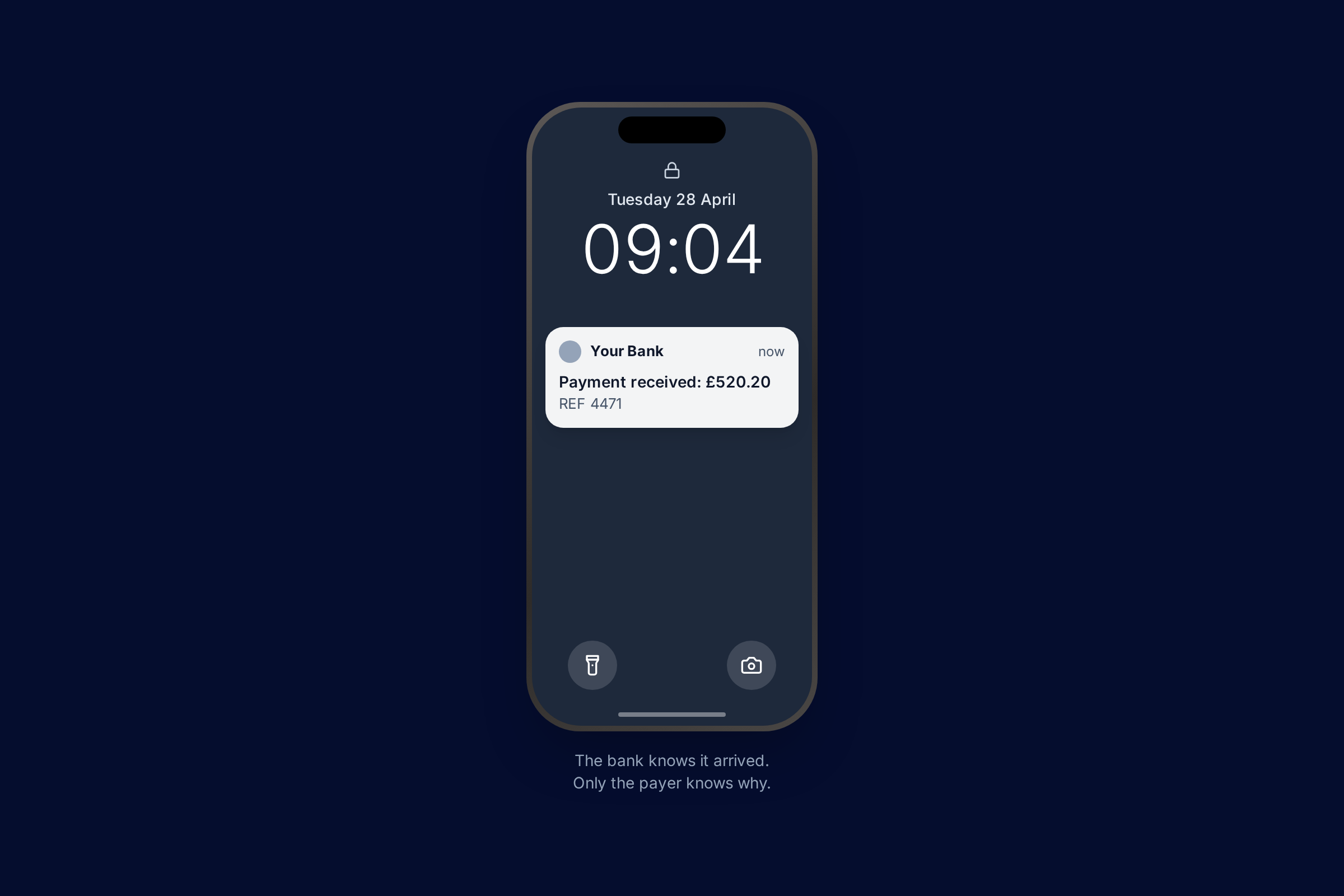
Our industry has spent years looking for better ways to talk to members. Somewhere along the way, the obvious place got overlooked in favour of the complicated one.
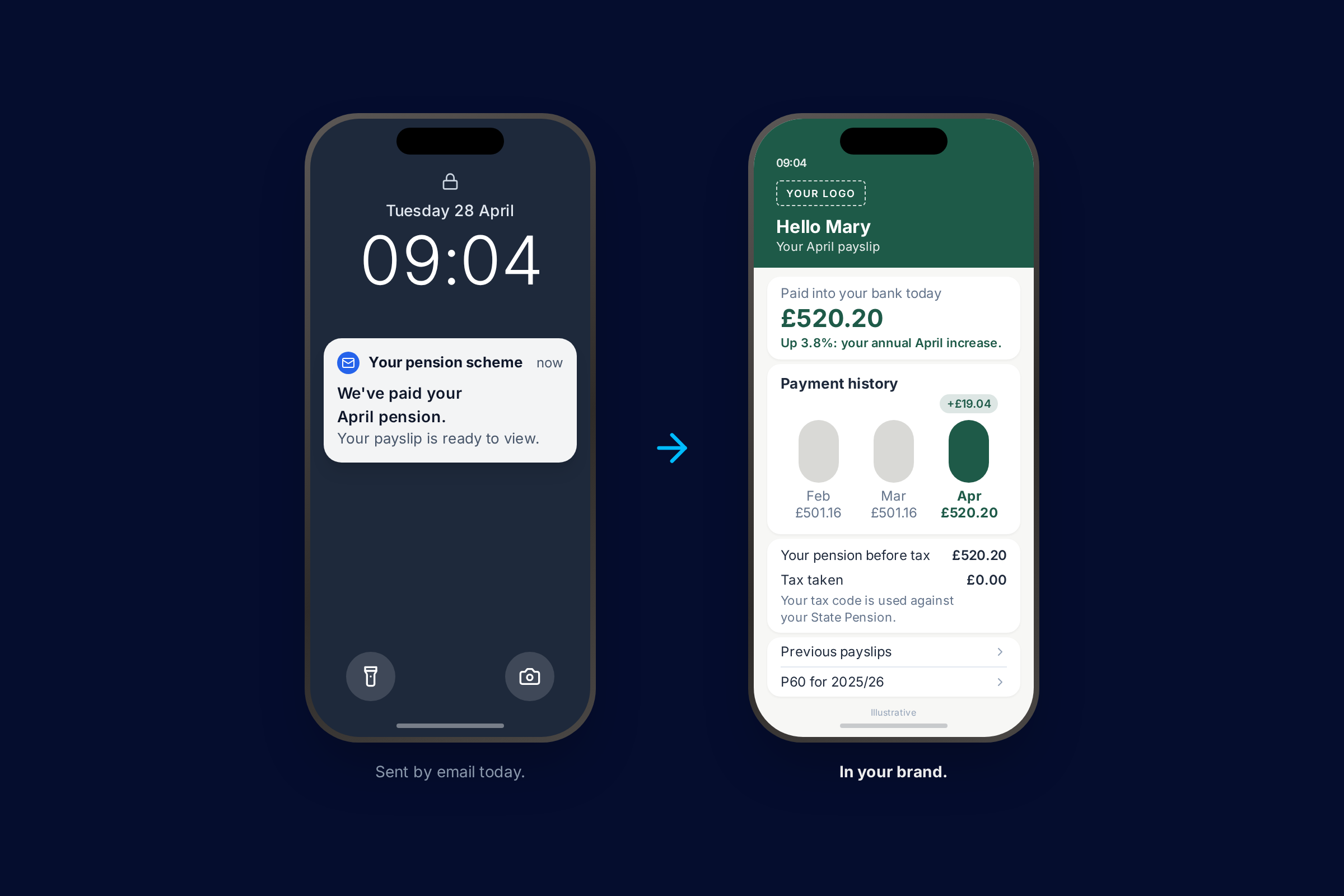
However, the fix isn’t complicated. Pensioner payroll already produces the data. Turn it into a digital payslip from the scheme, delivered securely to the member’s phone or computer on the day they’re paid. Then, while they’re paying attention to their money, bring them into the scheme’s world and point them to the things that could make a difference to their retirement.
The address goes stale. The bank account doesn’t.
A scheme can’t get a member’s bank details wrong for long. If it does, the payment fails and someone fixes it. The postal address has no such test. Members move closer to family, downsize or go into care, and telling the pension scheme is rarely first on the list. Nothing bounces. The letters keep going to a house the member has left, and the first the scheme hears of it, if it hears at all, is an envelope marked “gone away”.
The scheme always knows where the money goes. It’s much less sure where the letters go.
Someone else sets the price
Post isn’t cheap, and the scheme doesn’t control what it costs. Once stationery, printing, enclosing and postage are counted, a posted item costs somewhere between 60p and £1.20. Most members in payment receive three or four a year. For a scheme paying 50,000 members, that’s between £90,000 and £240,000 a year, at prices Royal Mail sets and that have moved in one direction for years.
For that money, the scheme learns one thing: that the letters left the building.
The April phone call
Every April, pensions in payment increase and tax codes change. The amount arriving in the member’s account moves, sometimes by less than they expected, and for some it falls. Then the phones ring.
Anyone who has worked in pensions administration knows that week. The calls are reasonable. The member has seen a different number in their bank account, and nobody has told them why. The explanation exists; it’s in the payroll. It just reaches the member weeks later, in an envelope, if it reaches them at all.
A payslip that arrives on pay day saying “your pension went up this April, your tax code changed, and this is why your payment is different” answers the question before the member has to ask it.
They already do this
The usual objection is that older members don’t do digital. The evidence is more mixed than that. Age UK found that 39% of over-65s with a bank account don’t manage their money online. That’s a real number, and a good reason to keep paper for anyone who wants it. It also means most of them do. They’re the people checking a banking app on pay day to see that the money has arrived.
Nobody is suggesting the letter disappears tomorrow. The point is that for most members, the digital version arrives when they’re looking, and the paper version arrives when they’re not.
What comes back
This is the part that changes things for a scheme. A posted letter tells you it was sent. A digital payslip tells you how many members saw it, how many acted on what it said, and which groups didn’t. All of it feeds a management information dashboard the scheme can actually use.
Fincentive is in partnership with Experian, whose PayDashboard delivers digital payslips. Of the payslips it published between January and August 2026, 66% were opened. That’s a figure for employees, not for members in payment, so we don’t claim retired members will match it. But it is a number. Most schemes today can’t give any equivalent figure for the letters they send.
In 2014 the paper tax disc disappeared from car windscreens. Drivers still tax their cars; they just do it online, and nobody has campaigned to bring the disc back.
The annual pension letter will go the same way in time. The question for schemes is whether they wait for that or start using the channel they already have: the payment, every month, on the day their members are paying attention.
If this resonates, whether you work in pensions, advise schemes, or run one, we’d like to talk.
SOURCES
[1] Age UK. As bank branches continue to close, a new Age UK report reveals that 4 in 10 over-65s with a bank account do not manage their money online. May 2023. ageuk.org.uk
[2] Experian PayDashboard. Share of payslips opened, payslips published January to August 2026. Employee population.
[3] Fincentive estimate. Fully loaded cost per posted item, including stationery, printing, enclosing and postage. The 50,000-member example is a Fincentive calculation.
[4] DVLA. The paper tax disc was abolished on 1 October 2014.